
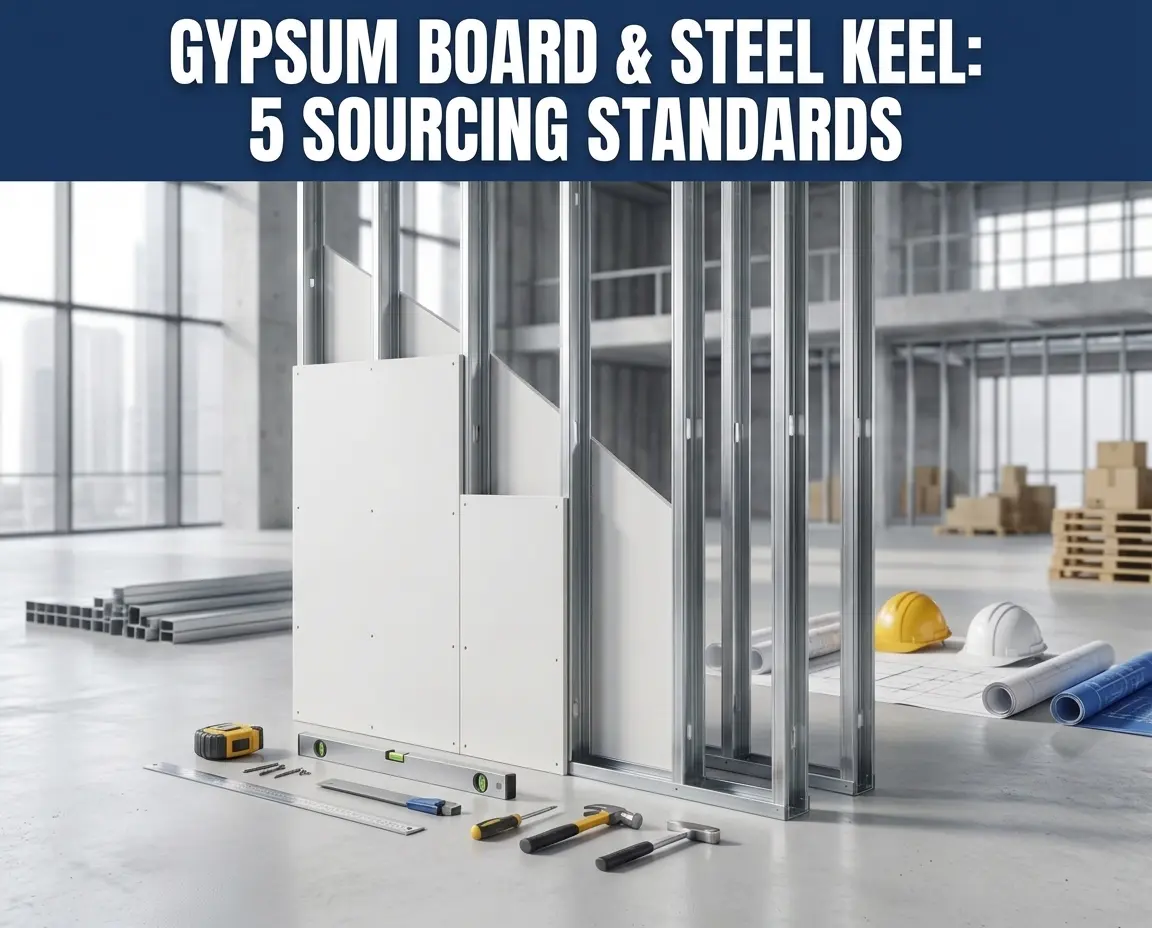

The gypsum board industry is witnessing a new international trade landscape.
At present, there is a significant regional differentiation in the international trade of Gypsum Boards. Data shows that the global market size ofGypsum Broad reached 3.17 billion US dollars in 2024, with the Asia-Pacific region accounting for 45.4% and dominating the market. China and India, among other emerging economies, are the core growth engines. Driven by the tariff reduction benefits of the RCEP, the transaction volume of Gypsum Board Ceiling in Southeast Asia increased by an average of 7.3% annually. The vigorous infrastructure demand in countries such as Indonesia and Vietnam provides broad space for gypsum board exports. Meanwhile, the implementation of the EU's Carbon Border Adjustment Mechanism (CBAM) has increased the cost of gypsum boards exported to Europe by 8-12%, forcing enterprises to accelerate their low-carbon transformation, and the utilization rate of recycled gypsum and industrial by-product gypsum has become a core competitiveness.
Product structure upgrading is the key for gypsum board enterprises to break through trade barriers. The profits of traditional ordinary Gypsum Wallboard have narrowed, while the demand for functional gypsum boards such as moisture-proof, fire-resistant and high-strength ones has soared. The unit price of high-end products is 60-80% higher than that of ordinary ones. Chinese enterprises have accelerated the technological substitution in the high-strength gypsum field. In 2023, the export volume increased by 41%. In the countries along the "Belt and Road" initiative, gypsum boards have gained a market share of 18% due to their suitability for prefabricated buildings, becoming the main force for capacity output. Leading enterprises are actively laying out green production capacity. For example, Siniat, a subsidiary of Etex, will incorporate 45% recycled components into Best Gypsum Board products, achieving zero landfill operation, which aligns with the global circular economy trend.
Looking ahead, the Gypsum Board For Walls industry will exhibit three major trends. Firstly, the pace of low-carbon transformation will accelerate. The utilization rate of industrial by-product gypsum is expected to increase from 45% in 2025 to 65% in 2030, reducing production costs by 8-10% and helping to address carbon tariffs. Secondly, regional deepening will be intensified. The infrastructure demand in emerging markets such as Southeast Asia and Africa will release an annual increase of 8 million tons of gypsum products, and Chinese enterprises can seize the opportunity by participating in cross-border production capacity cooperation. Thirdly, technological scenario integration and upgrading will be enhanced. New products such as foamed gypsum boards and intelligent gypsum components will explore the high-end market, and the demand for scenarios such as medical clean rooms and data centers will grow by 25-30%, enabling the gypsum board to be empowered and value-added.
Industry insiders point out that the gypsum board industry is currently in a critical period of transitioning from scale expansion to quality and efficiency improvement. Enterprises need to seize the green policy benefits, strengthen technological research and development and supply chain optimization, deeply penetrate the domestic market while precisely positioning in emerging trade regions, and adopt differentiated competition strategies to cope with trade fluctuations, in order to promote the high-quality and sustainable development of the gypsum board industry.